


 Deutsch
 English
 Español
 Français
 Nederlands
 Português


 Share
Share




The Great Decoupling is no longer a forecast—it is the defining economic fact of 2026. Following significant US trade barriers imposed in 2025 and subsequent deals that restored predictability at higher costs, non-US countries are signing new trade agreements among themselves at an accelerating pace. According to Deloitte's Global Economic Outlook 2026, restrictive US trade policy is pushing other nations to forge non-US trade agreements, fundamentally redrawing global supply chain architecture.
What Is the Great Decoupling?
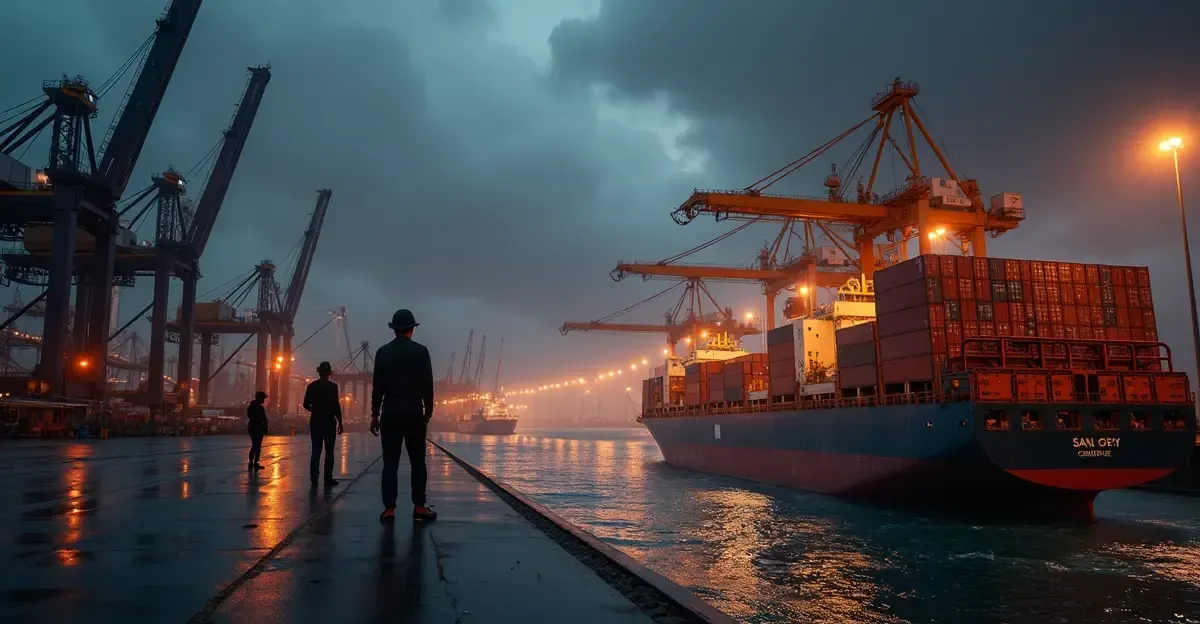
The Great Decoupling describes the shift from a globalized, US-centered trading system to a multi-bloc world in which production localizes within countries and supply chains reorganize into regional blocs. Global supply chain regionalization has accelerated because companies can no longer treat tariff risk as temporary.
How 2026 US Trade Policy Triggered the Shift
2025 Trade Barriers and 2026 Deals
In 2025, Washington imposed the highest tariffs since World War II. McKinsey's 2026 trade update reports average US tariffs hit about 15% by year-end, pushing over $165 billion of trade away from the US-China corridor and cutting US-China trade by roughly 30%. Deloitte notes that subsequent deals restored some predictability, but at higher costs. US tariff policy 2026 continues to reshape sourcing decisions.
Legal Reversals and Policy Pivots
The February 20, 2026 Supreme Court decision striking down IEEPA tariffs triggered $130 billion in refunds, yet the administration pivoted to Section 122 and Section 301 tools. According to Maseconomics analysis, the average effective US tariff rate stood at 10.3% in January 2026, up from 2.4% in 2024 and the highest since 1947. More than 3,000 new trade and industrial policy measures were introduced globally in 2025.
The CEO Response: Localizing and Building Regional Blocs
EY-Parthenon's 2026 Geostrategic Outlook reports nearly 75% of CEOs are localizing or have localized production within their country of sale, and just over half are reorganizing supply chains around regional blocs. Supply chain resilience strategies now dominate boardroom agendas, with friend-shoring manufacturing hubs rising in Mexico, Vietnam, India, and Brazil.
New Corridors: Asia, Latin America, and Europe Bypass the US
China has become a “factory to the factories,” exporting more machinery and inputs to emerging markets rather than finished goods to the US. ASEAN, India, and Brazil gained share as connectors, while the EU faces a double squeeze from Chinese imports and US tariffs. The CPTPP expansion is expected to finalize accession protocols for Costa Rica and Uruguay by Q3 2026, and EU-Southeast Asia deals add digital trade chapters. EU-Southeast Asia trade agreements are standardizing data localization rules.
Globalization vs Multi-Bloc Trading System
| Dimension | Old Globalization | 2026 Multi-Bloc System |
|---|---|---|
| Primary route | US-centered corridors | Regional blocs and bypass corridors |
| Production | Global offshoring to lowest cost | Localization within country of sale |
| Tariff environment | Low and predictable | High, volatile, weaponized |
| Key winners | US, China, global brands | ASEAN, India, Brazil, middle powers |
Strategic Implications for Corporations, Investors, and Policymakers
For multinationals, the new geography demands scenario planning across at least three blocs. Investors should reprice assets exposed to US-centered corridors and favor infrastructure in regional hubs. Policymakers in middle powers can position as connectors. EY-Parthenon advises executives to embed geopolitical analysis into strategy. Geopolitical risk management for businesses is now a core competency.
Frequently Asked Questions
What is the Great Decoupling in 2026?
The Great Decoupling is the shift from a globalized, US-centered trading system to a multi-bloc world where production localizes and supply chains reorganize into regional blocs, driven by US trade barriers and non-US trade agreements.
Why are CEOs localizing production in 2026?
Because US tariffs reached their highest levels since the 1940s, nearly 75% of CEOs are localizing production within their country of sale to reduce tariff risk and build resilience.
Which regions are benefiting from supply chain reorganization?
ASEAN, India, Brazil, Mexico, Vietnam, and Taiwan are gaining trade share, while China becomes a “factory to the factories” and the EU deepens ties with Southeast Asia and Latin America.
How much trade has shifted away from the US-China corridor?
More than $165 billion of trade moved away from the US-China corridor, and US-China trade fell roughly 30% as of McKinsey's March 2026 update.
Conclusion: From Globalization to a Multi-Bloc System
The world is not deglobalizing—it is reglobalizing into blocs. The Great Decoupling has moved from rhetoric to balance-sheet reality, and 2026 is the year the new architecture becomes visible.



Follow Discussion